
TD-H1-B documents face recognition, palm vein recognition, fingerprint, card and PIN access. The listed configuration includes a 2 MP camera, 300 user sets, 2.4 GHz Wi-Fi and a 4,200 mAh battery. Confirm the model, firmware and project requirements before quotation.
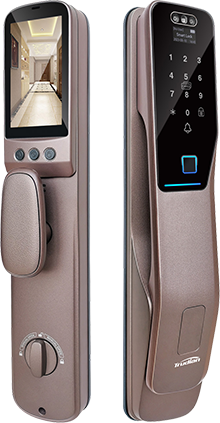
Use this view to check the camera, keypad and handle before confirming enrolment, fallback credentials and door fit.
The TD-H1-B data sheet lists the primary and fallback credentials. Use them to define enrolment and visitor access.
| Biometrics | Face recognition, palm vein recognition, fingerprint |
| Additional credentials | IC card, password, mechanical key, combination verification and temporary password |
| User capacity | 300 total sets for palm vein, face, fingerprint, PIN and card |
| Camera | 2 MP |
| Wi-Fi | 2.4 GHz Wi-Fi |
| App route | Tuya Smart App |
| Outdoor display | 0.96-inch OLED |
| Indoor display | 4.5-inch IPS |
| Dimensions | 421 × 82 × 68 mm |
| Lock mortise | 6068 / 6072 / 6085 |
| Operating temperature | -25°C to +75°C |
| Battery | 4,200 mAh lithium battery |
| Documents | Confirm certification and destination documents for the supplied configuration |
Match certification, privacy, language and installation evidence to the exact model, firmware and destination before quotation.
Biometric privacy, template handling and destination documentation should be reviewed for the selected model and EU project. Check current KfW or other funding rules separately.
View certificationsIR-assisted recognition and destination documents should be verified against the selected model and GCC installation. Confirm Arabic app or documentation requirements for the project.
Saudi Arabia detailsFCC and mechanical requirements should be matched to the supplied wireless variant and lock configuration. Confirm the intended residential or light-commercial application before release.
US market detailsConfirm branding, packaging and configuration against the TD-H1-B, destination and project scope before quotation.
The published TD-H1-B configuration lists face recognition, palm vein recognition and fingerprint access. Recognition performance depends on enrolment, firmware, lighting and installation conditions, so evaluate the selected model with representative samples before approval.
Do not treat a biometric label as a security guarantee. Define representative users, enrolment, lighting, fallback credentials and test conditions, then record the result against the selected model and firmware before approving a deployment.
The published TD-H1-B configuration lists 300 user groups. Recognition timing, angle, lighting and door-release behaviour depend on installation and configuration; verify the required workflow in a sample test.
Facial biometrics require a documented legal basis and privacy assessment under the applicable destination rules. Confirm template and access-log storage, retention, deletion, fallback credentials and operating responsibility for the selected model and app route. European workplace projects should complete their own DPIA and legal review before deployment; request any available Trudian guidance in writing.
Check approach distance, entry lighting, mounting height, weather exposure and the expected user flow. The TD-H1-B data sheet lists an operating range of -25°C to +75°C; destination suitability and any management connection are reviewed by model and project.
Appearance changes can affect recognition. Confirm whether the selected model supports re-enrolment or an update workflow, and keep PIN or RFID as a documented fallback where face coverings or changing users are expected. Verify the process and timing during sample acceptance.
OEM/private-label programmes start at 500 units and can include logo application, custom packaging, white-label app configuration, housing color and selected firmware requirements. Documentation and certification requirements are confirmed by product and target market before quotation.